Gustavo Piedrahita
ABSTRACT REALISM PAINTER
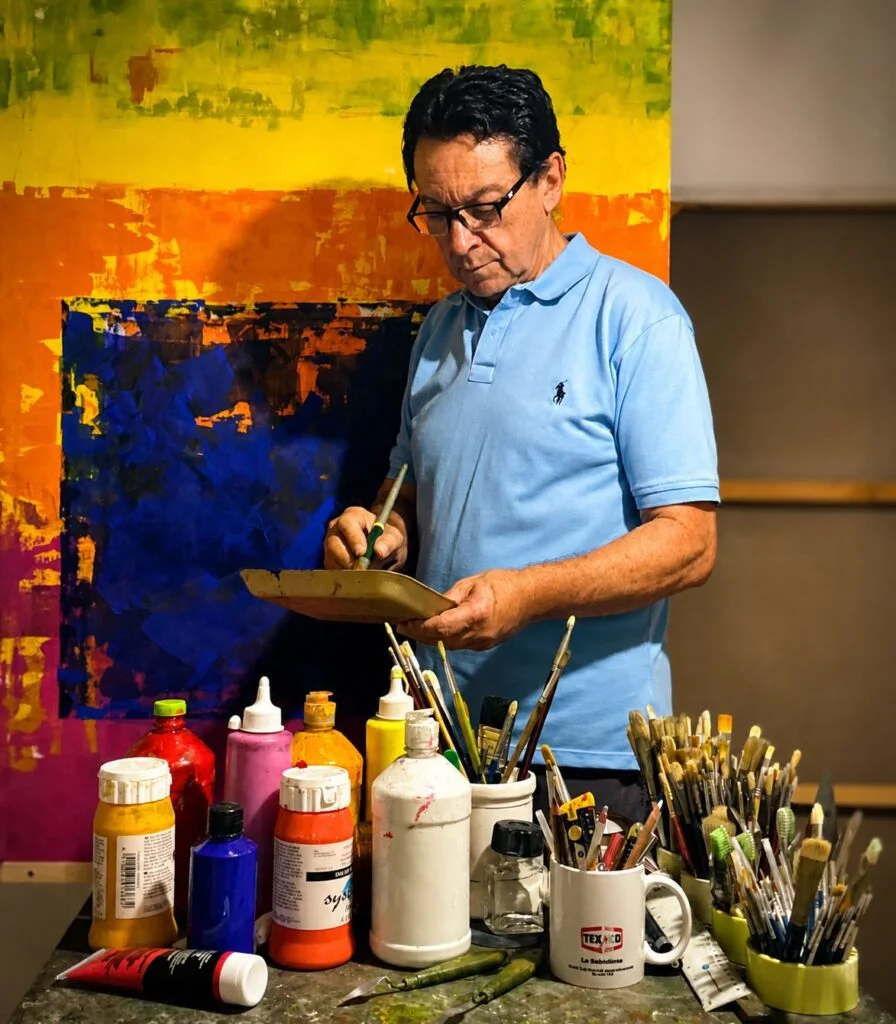
A self-taught artist from Medellín, Colombia, born in 1952.
My work is both figurative and abstract, and thanks to the synergy between these styles, I enjoy creating works of syncretic expressions.
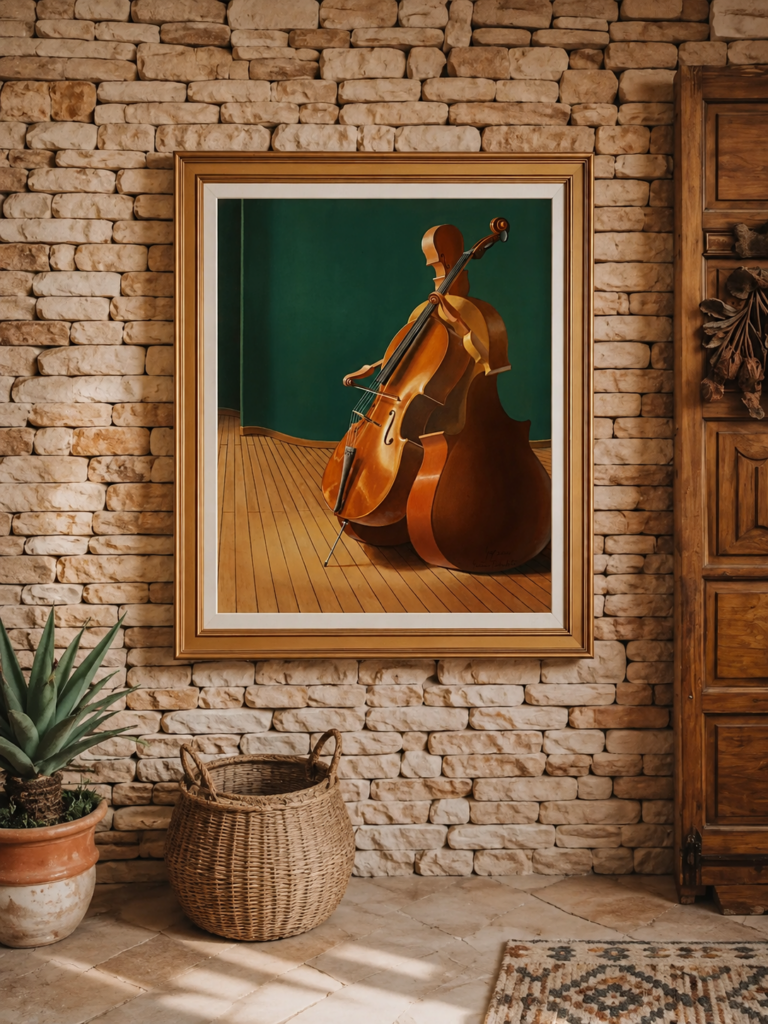
My figurative art is realistic, portrayed through compositions of “Still Life” and “Human Figure,” as well as pieces where, as an artist witnessing my time, I tackle social, environmental, and scientific themes, along with some myths from our magical realism.
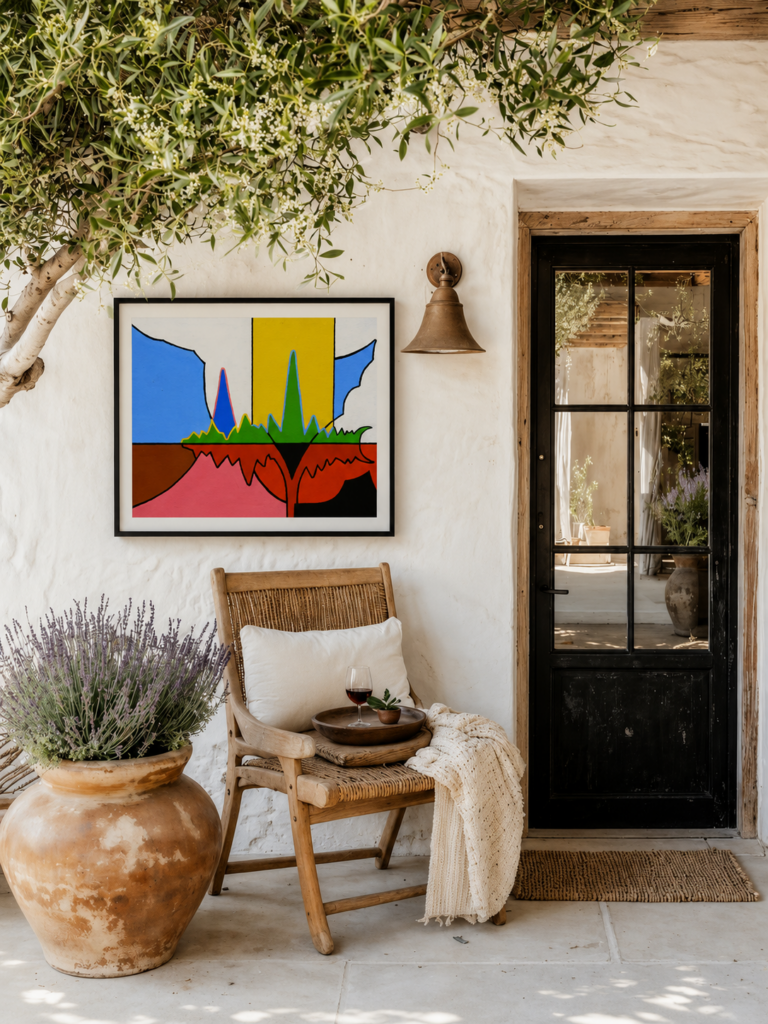
Abstraction plays a key role in my artistic expression. However, I do not view abstraction merely as a field of chromatic or gestural expression. Instead, I use color, form, line, and gesture in the broadest possible context to speak about us, and our reality, evoking, suggesting, and revealing what defines and affects us.
“Painting, as truly pure art, will be placed at the service of the divine.” Kandinsky
ABSTRACT REALISM
Since the first time I read “On the Spiritual in Art”, this phrase by Kandinsky has stayed with me for two reasons. The first is the adjective “pure,” which I find unnecessary because I believe it neither qualifies nor adds any extra value to art, as all art, as a human product, implicitly carries this quality. Of course, this is a very personal concept. The second is the offering to the Divine. I must confess this idea made me ponder for years. Kandinsky’s exploration of the divine in art is undoubtedly a profound topic. His reference to the divine likely transcends specific religious connotations and instead points to a universal spiritual essence. With that expectation of universality, I turned to two deities common to all cosmogonies, although known by different names, chaos and order. By invoking them, I am touching on fundamental principles that resonate across various cultures and philosophies. These dualities are not only present in the physical world but also within the creative process itself, where we as artists often navigate between structure
and spontaneity.
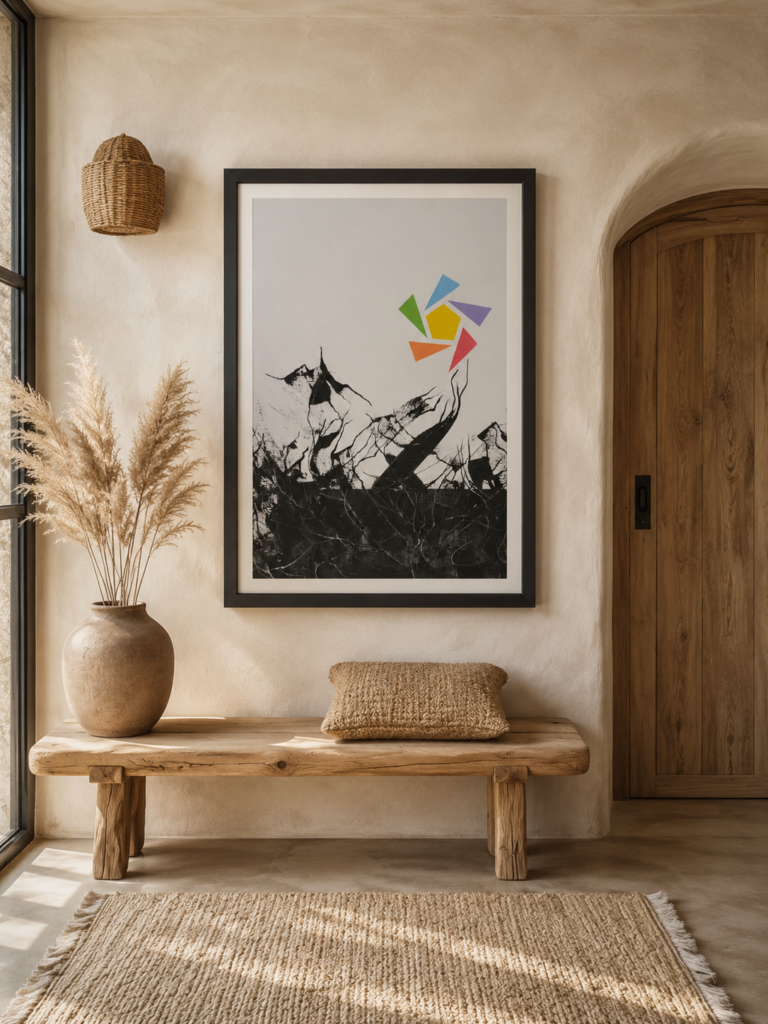
With abstraction as my goal, I began creating the first works around these two deity-phenomena: Chaos and Cosmos from Greek mythology as the conceptual axis. The initial idea was to start from a chaotic environment, created randomly on the canvas, and from there to intuit or impose a form that suggested order, for which I would use geometric figures. At the same time that I was beginning these first attempts to develop the work, I had the fortune of coming into contact with the Cliodynamics of Scientist and Historian Peter Turchin, with his analysis of secular historical cycles and the dynamics of societies. That was the counterpoint that set my course and satisfied my desire to give the work that syncretic quality that would allow me to speak of our reality through an abstract pictorial language, which I have named “Abstract Realism.”
It includes the series “Kaos & Kosmos”, in which I explore events where chaos precedes order, as well as those in which, paradoxically, order generates chaos. This has happened and continues to happen in our reality, provoking revolutions and bloody conflicts that usually bring about paradigm shifts in politics, culture, and religion, which characterize the dynamics of societies. For this, geometric forms, calligraphy, brushstrokes, gestures, layering, scraping and erasing, color, and intention become the language that tells the story.
A special chapter is the series “We ALL STREAK”, where the theme is the economy as a shaper and creator of reality. This is due to the delicate balance between the accumulative ambitions of decision-makers and the purchasing power of the rest, which determines how they will live, what they will enjoy, and what they will lack under the resulting conditions. For this, I appropriate the icons and patterns used in graphs representing economic variables, as well as the psychology of color, to describe the realities generated for different social groups.